Showing posts with label dental implant. Show all posts

Thursday, October 31, 2013

Livermore Dentist - Halloween Can Be Scary, Especially for Kids’ Teeth- Smiles By Design in Livermore


Your kids may be ready to indulge in sweet treats this Halloween, but don't let the holiday turn into an oral health nightmare. To keep your children's smiles safe from creepy cavities this season and all year-round, consider these tips from the Academy of General Dentistry (AGD).

Don't Get Stuck

"Sticky, chewy candies are cavity-causing culprits," says AGD spokesperson Connie White, DDS, FAGD. "Gummies, taffy, caramel—they all get stuck in the pits and grooves of teeth, where it's nearly impossible for saliva to wash them away. The longer that candy remains stuck in the teeth, the higher the risk of developing cavities." Encourage children to brush their teeth following candy consumption. If a toothbrush isn't handy, says Dr. White, give them a glass of water to help swish away the sugars. 

If the candy is sour, however, hold off on the brushing. Sour candy is likely acidic, so it's best to wait at least 30 minutes to an hour before brushing. The action of brushing can actually spread the acid onto more tooth surfaces, increasing its erosive action on tooth enamel.

 Eat, Then Treat
On Halloween night, allow children to enjoy a few pieces of candy, but only after they've eaten a nutritious meal.
"Chewing during a meal stimulates saliva, which has protective enzymes and minerals to cleanse the teeth and protect against cavities," says AGD spokesperson Mark Malterud, DDS, MAGD. "Plus, eating before treating will give kids nice full tummies, tummies that might have a little less room for candy." 
Do Your Part
When trick-or-treaters visit your home, pass out teeth-friendly treats. For example, sugar-free lollipops, hard candies, and chewing gum are better options than their sugary alternatives. 
"Sugar-free gum actually can help prevent cavities," says Dr. Malterud. "Not only does it dislodge food particles from between the teeth, but it also increases saliva to help wash away the sugars."
Brushing Basics
"No matter what season it is, kids should be brushing their teeth for two minutes twice a day and flossing once a day," advises Dr. White. "It's especially important to brush before bedtime. Otherwise, sugars will linger on the teeth all night long, increasing their risk of cavities."


Wednesday, October 23, 2013

Tracy Dentist - Mom's kiss can spead cavities to baby - Smiles by Design in Livermore


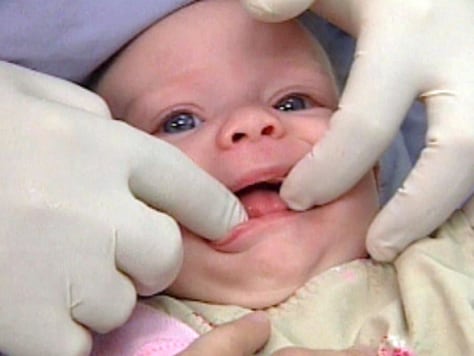
Image: Baby at dentist
NBC News Channel
Numerous studies have shown that cavity-causing bacteria can pass from person to person through the transfer of saliva, such as sharing utensils, blowing on food, and yes, even kissing that sweet little bundle of joy on the mouth.
 
When Rachel Sarah took her daughter in for her first dental checkup a few years ago, she got a surprise. Not only did her 24-month-old have two cavities in her baby teeth, the pediatric dentist suggested she might have “caught” them from her mom.
“The dentist handed me this piece of paper that talked about saliva transfer,” said Sarah, a 37-year-old writer from San Francisco. “It said not to share cups or utensils or food and said, ‘No kissing your kid on the lips.’ I was shocked; I’d been taking a bite of food and then giving her a bite since she started eating. I told the dentist I’d never heard of this and he said these were new findings.”
As it turns out, studies about the transmission of cavity-causing bacteria from mom to baby have been published for 30 years. The primary culprit is Streptococcus mutans, a bacteria that can pass from person to person through the transfer of saliva, such as sharing utensils, blowing on food, and yes, even kissing that sweet little bundle of joy on the mouth.
According to a 2008 study in Pediatric Dentistry, “strong evidence demonstrated that mothers are a primary source of MS [mutans streptococci] colonization of their children; a few investigations showed other potential sources … notably fathers.”
“There have been many, many studies,” said Dr. Jane Soxman, a pediatric dentist from Allison Park, Pa. “It’s well-documented. You can’t blame it all on kissing a child on the lips — that’s one of several different factors that would have to be working together. But the main thing to know is that tooth decay is a bacterial infection and you can spread it from one person to another during the window of infectivity, which is during infancy and especially during the time of tooth eruption. That’s when the teeth are most vulnerable. It’s as if you had a bad cold and were kissing your child, you would spread the cold virus.”
Only parents (or caregivers) with active tooth decay can spread the Streptococcus mutans bacteria through the transfer of saliva. And Soxman stressed that the transmission of bacteria-laden saliva is just one piece of the puzzle. Tooth decay is caused by a combination of factors, including the transfer of infectious saliva, genetics, oral hygiene, and feeding practices, such as letting your baby constantly suck on a sippy cup full of juice or milk or other sugar-laden liquid. (Bacteria uses the sugar to produce acid, which breaks down enamel.) Baby teeth are particularly vulnerable to decay.
“When teeth first come into the mouth, when they first erupt, the enamel is very soft,” said Soxman. “They’re brand new virgin surfaces and are very susceptible.”
by Diane Mapes
 

Monday, September 30, 2013

Dentist Livermore - Dental cavities linked to lower risk of head and neck cancer - Smiles by Design in Livermore


According to a surprising new study, people who have more dental cavities are at lower risk of being diagnosed with head and neck cancer, compared with patients who have few or no cavities.
 
Dental cavities (or caries) are caused by tooth decay. This is when the bacteria present in the mouth make lactic acids that strip away minerals in the tooth by fermenting carbohydrates.
According to the researchers from the University at Buffalo, NY, previous studies have shown the bacteria that causes tooth decay is linked to an immune response, which may be protective against cancer.
 
For this study, published online in JAMA Otolaryngology - Head and Neck Surgery, the researchers set out to determine if there is a significant link between dental cavities and Head and Neck Squamous Cell Carcinoma (HNSCC).
 
The study involved 399 patients newly diagnosed with HNSCC, and 221 participants without the cancer who were all selected from the Department of Dentistry and Maxillofacial Prosthetics at Roswell Park Cancer Industry between 1999 and 2007.
 
The researchers analyzed the dental history of all patients, particularly their history of dental cavities, by measuring the number of decayed, missing and filled teeth.

Dental cavities a form of 'collateral damage'

Of the 399 patients with HNSCC, 146 (36.6%) had oral cavity squamous cell carcinoma (SCC). Oropharyngeal SCC occurred in 151 (37.8%) patients, while 102 (25.6%) had laryngeal SCC.
The results of the study overall showed that those who had high cavity numbers and who placed in the top third of participants were less likely to have HNSCC, compared with participants who had low cavity numbers in the bottom third.
 
The study authors explain:
"Caries is a dental plaque-related disease. Lactic acid bacteria cause demineralization (caries) only when they are in dental plaque in immediate contact with the tooth surface. The presence of these otherwise beneficial bacteria in saliva or on mucosal surfaces may protect the host against chronic inflammatory diseases and HNSCC.
We could think of dental caries as a form of 'collateral damage' and develop strategies to reduce its risk while preserving the beneficial effects of the lactic acid bacteria."
The researchers say that a potential strategy to reduce the risk of dental cavities while still preserving the lactic acid bacteria could be to implement mechanical plaque control, preservation of saliva and use of fluoride, as well as controlling diet and other risk factors.
They add:
"Future studies assessing the potential effects of the oral microbiome and associated immune responses on HNSCC will help elucidate the biological mechanism of the clinical association that we have observed in this study."
Medical News Today recently reported on a study that suggested poor oral health and gum disease could lead to a higher risk of throat cancer.
Written by Honor Whiteman
Academic Journal
 

Wednesday, September 11, 2013

Tracy Dentist - What is Tooth Sealant - Smiles by Design in Livermore


Tooth decay is a major problem affecting most people.  When it begins to cause problems in the mouth, it simply looks like a black line, seemingly unthreatening, When the dental disease process is allowed to progress in the mouth it can cause bigger problems that is more serious than a dark line on the occlusal or biting surfaces of the teeth. Bacteria will eat the hard tissues of the mouth, breaking it; and when the bacteria has come deep enough to expose and infect the pulp tissues, the patient will begin to feel some pain and sensitivity. If the infection spreads is left on its own course, the pulp can become inflamed, indicating a need for a pulp therapy or an even more unfortunate dental extraction.
The disease process in the mouth usually follows a slow progression, but once the disease is full blown, you are left alone to suffer the consequences. The best way to deal with dental cavities is to completely avoid them and that is where tooth sealants will become very important.

Investigations on the effectiveness of dental sealants began in the 1960s and after a decade, it was approved for use by the FDA, for use on dental patients. They are plastic-like coatings that are meant to seal the deep grooves and fissures on the tooth or teeth, so that food particles cannot accumulate and provide a perfect breeding ground for bacteria. Sealants can actually be applied on any kind of tooth, but since the molars have deeper grooves and they are subjected to most of the masticatory forces of the mouth, they are most susceptible to tooth decay and dental infection. For this reason, the molars are most indicated for dental sealants; and although adult teeth can also be applied with sealants, it is most commonly done on the molars of children between the ages of 5 and 12 years.

source: http://www.teethcenter.com/what-is-tooth-sealant/


Monday, September 2, 2013

Tracy Dentist - Five Cleaning Tips for a Healthy Mouth - Smiles by Design in Livermore

Five Cleaning Tips for a Healthy Mouth
 
Cleaning rituals should also include taking inventory of teeth cleaning routines, according to experts at the American Academy of Cosmetic Dentistry (AACD). The following are five habits dentists recommend that adults do each day to keep oral hygiene in top shape.
 
1. Use an Electric Toothbrush
At more than 30,000 strokes per minute compared to the average of 100 strokes per minute with a manual toothbrush, electric toothbrushes work harder by pushing fluid between teeth and around the gum line, which provides a more effective cleaning.
 
Regardless of whether or not you have cavities, using an electric toothbrush over time prevents gum inflammation, gingivitis and periodontal disease.
 
2. Floss at Night
The CDC reports that nearly 65 million Americans—one out every two adults ages 30 and older—have gum disease. Therefore, flossing once a day is crucial to avoid plaque and tartar, a hard mineral deposit that can cause gums to become swollen and inflamed, leading to gingivitis, the earliest stage of gum disease.
 
The recommendation is to floss at night, because during sleep cycles, less saliva is produced to naturally clean teeth and gums, so oral bacteria are free to do more damage. Therefore, it’s important to brush, floss and scrape your tongue every night to get rid of bacteria and go to bed with your mouth as clean as possible.”
 
3. Select the Right Toothpaste
Be sceptical of any toothpaste that promises to "whiten" teeth. The reality is that removal of surface stains by a toothpaste will make the tooth "look" lighter, but not change its inherent color. To lighten or "bleach" teeth, schedule a professional in-office whitening treatment, or use over-the-counter name brand bleaching products that work on the internal aspect of the tooth, not just the external aspect as a toothpaste does.

4. Don’t Forget Mouthwash
A refreshing and cost-effective alternative to store-bought mouthwash is creating a Homemade Anti-Cavity Mouth Rinse. The following recipe was developed for the AACD by Dr. Shawn Frawley, a cosmetic dentist with a family practice in Beverly Hills, Calif. This recipes uses xylitol,  a sugar substitute that studies show prevents tooth decay.

Ingredients:
8 ounces water
2 teaspoons PreviDent GEL (1.1% Sodium Fluoride)*
½ teaspoon baking soda
1½ Tablespoons xylitol* 
¼ teaspoon peppermint oil extract or favorite flavor
 
* Sodium Fluoride is available from a pharmacist
Directions:
Blend ingredients together with an emersion blender or regular blender. Store in the refrigerator in an air-tight container.
Usage:
Rinse with 2 teaspoons for approximately 1 minute, 1-2 times per day after brushing. For best results, do not eat, drink, or rinse for 30 minutes after expectorating. Do not swallow.
This recipe makes approximately a 2-week supply.
 
5. Eat Foods Good for Healthy Teeth
Research studies show that certain foods naturally cleanse your teeth while you eat them. The AACD developed nine nutritious recipes from breakfast to dinner using these key ingredients: 
•   Fruits like strawberries and pineapple are high in fiber and vitamin C. The citric acid in pineapple also provides an all-natural bacteria-fighting mouthwash.
•   Veggies like Kale and broccoli are high in minerals that strengthen tooth structure and prevent enamel erosion (or yellowing).
•   Onions and wasabi –a type of Japanese horse radish both contain compounds that reduce oral bacteria.
•   Quinoa has minerals including Calcium, Magnesium and Phosphorus to strengthen teeth.


Monday, July 29, 2013

Livermore Dentist - Different Types of Dental Braces - Smiles by Design in Livermore


Types of Dental Braces
Advances in technology today mean that you may not need to have a mouth full of metal to straighten your teeth. There are a variety of braces types all ranging in prices, aesthetics and comfort. Below is a list of pro’s and cons for each type.
Ceramic Braces
Work similarly to traditional braces but brackets are tooth-colored
Pro’s
- Blend in with most teeth and are not very noticeable
- More comfortable than metal braces
- Very strong
Cons
- Elastics can stain, but are changed monthly during adjustments
- More expensive than traditional metal
- Treatment may take longer
- A bit larger than metal braces
- Can not be used in all cases
Sapphire Inspire! Brand Braces
Like ceramic braces but more white in color and do not stain
Pro’s
- Blend in with most teeth and are not very noticeable
- More comfortable than metal braces
- Very strong 
- Do not stain
Cons
- More expensive than traditional metal
- Treatment may take longer
- A bit larger than metal braces
- Can not be used in all cases
- Are very white in color and can be seen on teeth that are not very white
Invisalign Braces
 Teeth are moved using clear moulds which are pre-manufactured for self-adjustments
Pros
- Virtually invisible
- Easier to clean
- Less irritating to gums
- Do not stain
- Aligners are numbered so you can see exactly how long your treatment will take
- You receive computer simulation showing you the change in your teeth at the end of each phase
- Fewer visits to the orthodontist as you complete your own bi-weekly adjustments
Cons
- Cost more
- May still require braces for a few months after use to correct certain problems
- Not a pain-free treatment
- Orthodontist has limited control over the treatment because the plastic trays are computer-fabricated
- Takes six weeks for the aligners to arrive from the factory
- Can not be used in severe cases
- Move the back teeth before the front teeth so results are not visible immediately
Lingual Braces
Braces are installed behind the teeth rather than in front.
 
Pros
-         Other people can’t see the braces at all as they are installed behind the teeth rather than in the front
 
Cons
-         Can hurt the tongue
-         Speech is difficult at first
-         More expensive
-         Treatment can take a few months longer
-         Orthodontist must be specially trained in lingual treatment
-         Can not be used in severe cases
 
Metal Braces
 There are a variety of types of metal braces. Some types require a rubber band to be wrapped around each metal bracket to hold the wire to the brackets. Others are specially shaped to move the teeth more quickly and with less pain. There are a variety of metal brackets which are designed to hold the wire to the teeth without the use of rubber bands, and now there is a new self-ligating bracket which is tooth-colored so that they are less visible than the standard metal brackets.
 
Pros
-         Least expensive
-         Take the least amount of time
-         You can chose a darker ligature that will not show food stains
-         Strong and rarely break
-         Option of gold or silver brackets
-         Certain types can shorten treatment time with less pain
 
Cons
-         More visible than some other types
-         Tend to be less comfortable at first
-         Cuts in the mouth are easily irritated by the metal brackets


Monday, July 15, 2013

Livermore Dentist - What is Tooth Enamel Erosion? Smiles by Design in Livermore


tooth enamel erosion and dental plans ma
I chose this topic this week because I seem to be seeing a lot of television ads about enamel erosion.  I wanted to look into it a little further so that I could check the facts on these ads and also try to find out if I can prevent my own erosion.  I do have sensitive teeth which is one of the symptoms.
Here are a couple of facts:
  • Enamel is said to be the strongest substance in our bodies.
  • Enamel is what protects the less dense dentin and other parts of the tooth.
My question is: Why does it appear to be able to erode so easily if it’s so durable?  Acids in the mouth consistently erode away at this hard substance.  Are we eroding it away so quickly because of the diets we have?  That appears to be much of the problem.  Any acidic foods such as orange juice, sour candy and sodas facilitate the erosion process.  Any foods that produce acid like those with sugar do the trick as well.  There are a number of medical conditions that can also help with a faster process of erosion such as dry mouth, acid reflux, bulimia and alcoholism.
stop bacteria with dental plans in maSo what can we do to prevent it?  Research says that we should mitigate the acid in our mouths once these foods are consumed.  The first thing is to not eat those foods – Duh!  One interesting suggestion is to drink a glass of milk or eat a piece of cheese after eating your meal.  Others are:
  • Drink water throughout the day to rinse any acids off;
  • Use a very soft toothbrush.  Overly vigorous brushing can create weak spots which allow acid to seep onto the dentin;
  • Use a straw to drink the junk drinks that you must consume.  The straw helps to bypass the teeth a little;
  • Brush your teeth after you eat acidic foods, but wait an hour.  The acid softens the enamel, so by waiting, it will harden up a bit so you don’t scrub more of it away;
  • Chew sugar-free gum with xylitol; and
  • Floss regularly, but do not use a toothpick.  You could chip away the enamel with any hard object such as opening packages or bottles or chewing ice or seeds.
Once the enamel is gone, it does not grow back.  So even if you chip your tooth, there’s no going back.  When we erode away this protective covering, there is no way to get it back, regardless of what new and exciting products are now on the market.  By rinsing with a fluoride rinse, you can strengthen the dentin inside the tooth if there is a way in.  The only other way to restore your teeth’s strength is to have your dentist bond them or put a crown over the tooth.  Modern dentistry has certainly provided better looking restorations.  I’m sure we all know an elderly person with off color or strange looking tooth coverings!
So, in conclusion, I think the best and most practical solution is to mostly avoid the acidic foods if we can.  For me, the easiest solution I can do is to drink more water throughout the day and to chew a piece of gum after my meals since that provides more than one benefit to my breath and my teeth. You can read about these benefits in one of our previous blog posts!
How are you going to prevent enamel erosion?
Remember to have your teeth cleaned twice a year!
by Jenny Bickford-jessie
 

Monday, July 1, 2013

Dentist Livermore - What Causes Tooth Sensitivity? - Smiles by Design in Livermore


What is it?
Tooth sensitivity is something that affects a number of people. It is often caused by eating or drinking something hot, cold, sweet or acidic. Under normal conditions, the underlying dentin of the tooth (the layer that immediately surrounds the nerve) is covered by the enamel in the tooth crown, and the gums that surround the tooth. Over time, the enamel covering can get thinner, thus providing less protection. The gums can also recede over time, exposing the underlying root surface dentin.

The dentin contains a large numbers of pores or tubes that run from the outside of the tooth to the nerve in the center. When the dentin is exposed, these tubes can be stimulated by changes in temperature or certain foods. Here is an image of what the dentin tubes look like under the microscope:

Microscopicviewofdentin

What causes it?
Exposure of the dentin can occur due to a number of factors. Some of the more common reasons are:
  • Gum recession due to age or improper tooth brushing
  • Acidic beverages (such as soda) that cause enamel erosion and dentin exposure
  • Tooth grinding – this may actually cause most or all of the teeth to feel sensitive
  • Brushing with a very abrasive toothpaste, brushing incorrectly and/or brushing more than three times a day could result in a loss of enamel
  • Gum disease, which can result in gum recession
  • A chipped or fractured tooth may expose the dentin
In addition, some dental treatments can cause sensitivity. Treatments such as such as teeth whitening, professional dental cleanings, having braces put on or getting a filling placed have been known to cause sensitivity during or after the procedure.

What can I do about it?
The first step in doing something about dental sensitivity is to find out what the cause is – a dental professional can help you with this. If the sensitivity is due to exposed dentin, there are a number of steps you can take, as can your dental professional, to help reduce the sensitivity. These can include:
  • Using a very soft bristle tooth brush
  • Brushing correctly to help prevent abrasion of the enamel and recession of the gums
  • Using a toothpaste specially formulated to help reduce sensitivity
  • The dental professional can:
    • Apply a fluoride varnish on the sensitive areas to help strengthen the tooth
    • Prescribe a high fluoride tooth paste to use every day
    • Place a dental restoration to build up the areas that have lost enamel
In the end, whether you need an in-office procedure or over-the-counter products, the most important step is to see a dental professional so that he or she can determine the cause of the tooth sensitivity and help you find a solution that will work.

source: http://www.colgate.com/app/CP/US/EN/OC/Information/Articles/Oral-and-Dental-Health-Basics/Common-Concerns/Sensitivity/article/What-Causes-Tooth-Sensitivity.cvsp?cid=ppc_gg_nb_stan_sensitivity_&kw=what%20is%20teeth%20sensitivity


http://www.smilesbydesigninlivermore.com

Friday, June 21, 2013

Pleasanton Dentist - Should I have my Wisdom Teeth Pulled? - Smiles by Design in Livermore


The wisdom teeth or the third molars erupt at the age of 17 to 21 years. If there is sufficient space, the teeth can erupt normally into the mouth and take its place beside the second molars. Sometimes, however, even when there is enough space and especially when the space is compromised, the teeth will not be able to erupt completely, and it will assume a different position. Depending on its position, the wisdom tooth can exhibit some pain symptom. Some of the symptoms will involve tenderness to touch, swelling and bleeding gums, jaw pain, pressure on the ears, tinnitus or ringing in the ears, heavy feeling on the jaw and pain around the area of the second and third molars.

Depending on the symptoms presented, as well as the position and the condition of the tooth in the mouth, a surgical removal will be indicated. This surgical removal of  impacted wisdom teeth is termed  Odontectomy, and compared to normal extraction procedures which basically involves the mere loosening of the teeth from fiber and bone attachment, Odontectomy is so much more complicated. It involves gum incision and flap reflection, bone reduction, toothsectioning and suturing.

Not all wisdom teeth have to be removed. As discussed earlier, some teeth erupt normally beside the second molar, and these teeth do not have to be bothered, Teeth that present with symptoms have to be removed, but the question here is: what about wisdom teeth that seem to be causing no problem to the patient, at all? Well, you should know that the absence of pain symptoms does not mean you are safe because:
  • Based on the position the wisdom tooth takes in the mouth, it can slowly cause damage to the structures and the tooth (or teeth) beside it.
  • The constant pressure that the wisdom tooth is putting on the rest of the teeth in the mouth, is causing some displacement and movement, and so crowding the teeth on the anterior.
  • A tooth or teeth that is allowed to stay under the mouth for long may develop an infection that can become cystic, thus eating bone and causing an even bigger problem.
Should you have you wisdom tooth pulled? If this tooth did not erupt normally into the mouth, it is going to be safer and smarter for you to do so, because always remember: “prevention is better than cure”.

source: http://www.teethcenter.com/should-i-have-my-wisdom-teeth-pulled/
by Teeth Center Staff


http://www.smilesbydesigninlivermore.com

Friday, June 14, 2013

Tracy Dentist - Toothache Remedies For Pain Relief - Smiles by Design in Livermore

 
If there’s one list to keep handy–this is the one. It never fails that a major toothache hits when it’s late at night and your dentist’s office is closed. Although only a doctor can cure the source of the problem, this list of treatments & pain relief remedies should get you through the night until you can visit the dentist.
Important: If your tooth aches, there is a reason for it and it’s best to have it taken care of by a professional as soon as possible instead of just treating it at home and hoping the underlying issue will go away on its own. If it’s infected (gum area is swollen), don’t delay in getting professional medical care.
Directions for use: Apply directly to both the problem tooth and surrounding sore gums until unless otherwise directed.
For items that direct you to chew or for liquids that are to be swooshed around inside mouth, do so with the sore tooth and focus on surrounding area.
Do not swallow liquids, spit out when done.
  1. Salt Water: Mix a heaping spoonful of salt in a small glass of lukewarm to warm water, swoosh around inside your mouth for as long as you can, spit out. Repeat a couple times.
  2. Cloves: This is an old timer’s remedy, rest a clove against the sore area until pain goes away. You can also use a drop or two of clove oil (too much can be toxic) or make a thick paste of ground cloves and water or ground cloves and olive oil.
  3. Alcohol: Swoosh a bit of whiskey, scotch, brandy or vodka. A strong mouthwash that contains alcohol will do the trick too.
  4. Hydrogen Peroxide: Swoosh a bit of hydrogen peroxide. If the taste is too horrid for you, try diluting with a bit of water.
  5. Vanilla Extract: Saturate a cotton ball with vanilla and hold in place. Can also use a cotton swab dipped in extract.
  6. Almond Extract: Same method of treatment as with Vanilla (above).
  7. Peppermint Extract: Same as with Vanilla (above).
  8. Lemon Extract: Same as with Vanilla (above).
  9. Tea Tree Oil: Just a drop or two will do the trick. You can also add some to a cotton swab and hold in place or add a few drops of tea tree oil to a small glass of lukewarm to warm water and swoosh this around.
  10. Oil Of Oregano: Mix a few drops with a bit of olive oil, then saturate a cotton ball with mixture. Can replace the olive oil with lukewarm water if preferred.
  11. Apple Cider Vinegar: Soak a cotton ball with apple cider vinegar (ACV) and hold it in place. Can also try regular household vinegar.
  12. Ginger Root: Take a fresh piece of ginger and chew it a bit.
  13. Garlic: Take a clove of garlic, smash it and apply (settle it inside cheek). You can also mash some garlic with salt.
  14. Peppermint Leaves: Chew on fresh peppermint leaves. You can also dried leaves, just hold them in place.
  15. Potato: Cut a fresh piece of potato (raw, skin off) and hold in place. Can also pound a piece of raw potato, mix in a bit of salt and use the mash.
  16. Lime: Cut a slice or wedge of lime and apply, bite into it if you can to release some of the juice. If you’re sensitive to cold, first bring the lime to room temperature if it was refrigerated.
  17. Onion: Slice a piece of fresh onion and hold it inside your mouth. The onion needs to be freshly cut (so it provides a bit of onion juice).
  18. Cucumber: Slice a fresh piece of cucumber and hold it over the sore area. If refrigerated, you might want to bring the cucumber to room temperature before using (if sensitive to cold) otherwise a cool piece can be soothing. You can also mash a piece with a bit of salt.
  19. Plantain: Chew up a fresh plantain leaf. If you’re too sore to chew, use the other side of your mouth. Once the leaf is macerated a bit apply it to the problem area and hold in place.
  20. Cayenne Pepper: Make a paste with cayenne pepper and water.
  21. Black Pepper: You can use this full strength or make a mix of pepper and salt.
  22. Baking Soda: Take a cotton swab and moisten it with a bit of water, dip it in baking soda (coat the swab really well with baking soda) then apply. You can also make a mouth rinse by mixing a heaping spoonful of baking soda in a small glass of lukewarm to warm water, dissolve the soda then swish the mixture in your mouth.
  23. Tea: Make a fresh cup of tea then take the used tea bag (still warm) and stick it in your mouth. Careful not to tear the bag. The tannins that are naturally in tea leaves can help numb things.
  24. Ice Pack: Cover an ice pack with a face cloth or towel then hold over your cheek where the problem is. This will help numb things. If that doesn’t work, try the opposite–a hot compress (not too hot that it burns your skin)
    • If the pain is unbearable and there’s no dentist available, call your local hospital’s emergency room–chances are they have a dentist on call that can treat you (for a fee).
 

Wednesday, February 22, 2012

Livermore Dentist - Make Your New Smile Results Last Longer - Smiles by Design in Livermore

Newbeauty


So you've put in the time and gone through the trouble of dramatically improving your smile. Whether you've had veneers applied or simply had your teeth whitened, now's the time to practice smart dental habits to ensure the procedures you've undergone last as long as possible. Here are some top tips to keep your new smile looking great:

Veneers
- Don't use your teeth as tools and use care when biting into hard foods as you can damage your veneers--the thin, porcelain restorations that are adhered to your natural teeth to fix discoloration, spacing or alignment issues.

- Opt for toothpaste that's designed for cosmetic enhancements, but don't waste your money on bleaching products since veneers cannot be bleached.

- Up your dental visits to three times a year and continue flossing regularly to maintain healthy gums.

Bonding
- If you've cracked a tooth or want to fill gaps, your dentist can add to your natural teeth with bonding. But keep in mind the putty-like resin can, indeed, chip again, so be sure to only use your teeth for eating and not as tools.

- Since bonding uses resin instead of porcelain, it is more apt to stain. Avoid highly-pigmented foods and drinks like soda, red wine, berries and coffee, or if you consume them, drink a glass of water or two afterward.

Bleaching
- Immediately after your bleach treatment, the product continues to work while the enamel in your teeth returns to normal. During these first few days, you may want to stick to eating only white-colored foods. Be sure to ditch your old bad habits for good, especially smoking.

- Opt for a professional-grade whitening toothpaste like Supersmile Professional Whitening System, formulated to keep your smile white without harsh ingredients that weaken enamel.

- If your teeth are sensitive after bleaching, use a mouthwash or toothpaste that has calcium in it to help harden the enamel.

source: www.newbeauty.com  by Shellie Terry Benson

Wednesday, February 15, 2012

Pleasanton Dentist - Dental Floss - Smiles by Design in Livermore


Did you know that more than three million miles of dental floss is purchased in North America each year? That’s a lot of floss, especially since studies show that only 28% of people use it every day.

Have you ever wondered where floss came from? Well, in 1815, a dentist named Levi Spear Parmly advised his patients to use a thin silk thread to clean between their teeth. This is where the idea originally came from. The first time floss was commercially manufactured in 1882. This floss was unwaxed and marketed by Codman and Shurleft Co. Johnson & Johnson introduced their silk floss in 1896 and then patented dental floss in 1898.

source: infinitydentalweb by Julie

Tuesday, February 14, 2012

Tracy Dentist - Protect Your Smile with Athletic Mouthguards During Play - Smiles by Design in Livermore

      
If you or your child participates in sports or other recreational activities, you know the importance of protective gear. Wearing protective gear is essential for safe play and shielding fragile body parts from severe damage and injuries.

One good way to protect your teeth is by wearing an athletic mouthguard during any activity that could cause harm or injury to your mouth. The TRICARE Dental Program (TDP) covers enrollees for one custom fitted athletic mouthguard at a 50 percent cost-share, per consecutive 12-month period.

Athletic mouthguards help to prevent broken and chipped teeth, cuts inside the mouth and tongue, even nerve damage and tooth loss possible during some activities. Using an athletic mouthguard may also reduce the rate and severity of concussions, according to the American Dental Association (ADA). Athletic mouthguards absorb some of the shock experienced from a blow to the head, and help to distribute it evenly.

According to the ADA an athlete is 60 times more likely to suffer injury to their teeth or mouth when not wearing an athletic mouthguard. Even in non-contact sports like gymnastics and biking, athletic mouthguards are shown to help prevent injuries.

There are several types of athletic mouthguards available. Many stores sell pre-formed and “boil and bite” mouthguards that are not covered by the TDP. These are generally less expensive options than having your dentist custom-fit a piece for you, however they will most likely not fit as well and may be uncomfortable to wear.

Your athletic mouthguard should fit comfortably, and not restrict your breathing or speech. It should be easy to clean and made of a resilient, tear-resistant material. Visit your TDP-participating dentist and talk about the best option for you and your children.

Athletic mouthguards are easy to care for and should be taken care of properly. Make sure you clean your mouthguard after each use, either by brushing with a toothbrush and toothpaste or by washing with cool, soapy water and rinsing with clean water. You should regularly wash your mouthguard with soap and water and carry it in a sturdy, well vented container. Don’t leave the piece in the sun because extreme heat can affect the shape and fit of your mouthpiece. Finally, take your mouthguard to each dentist appointment so that your dentist can check for proper fit and damage or wear. Your dentist can answer any questions you might have about use or care.
     
Source: www.tricare.mil
Col. Jeff Chaffin DDS                                                                                                                                         


Monday, February 13, 2012

Livermore Dentist - 4 Smile Makeover Myths—Busted - Smiles by Design in Livermore

4 Smile Makeover Myths—Busted

4 Smile Makeover Myths—Busted

Source: NewBeauty Staff

There is a lot of information out there about getting and maintaining your best smile. Some of it is really great info. Some of it is, for lack of a better (politically correct) word, baloney.

If you're considering a smile makeover with veneers, you better be able to separate fact from fiction. Here are four common myths that deserve some good old-fashioned busting.

Myth 1: Veneers are a one-time procedure.
Every case is different, and veneers last from five to 12 years in average, but in some cases, veneers have lasted as long as 20 years. "There is a limited life expectancy on every restoration," says Atlanta cosmetic dentist Ronald E. Goldstein, DDS. So, you'll have to replace them at some point.

Myth 2: Veneers only alter the look of the teeth.
Fact: Veneers can be used to build out the back teeth, making the cheeks appear fuller for a more youthful appearance overall.

Myth 3: All veneers are the same.
There is a big difference between regular and no-prep veneers, which require no tooth removal; however, only those who have pretty straight teeth without heavy stains qualify for them. Your teeth alignment has to be pretty close to ideal.

Myth 4: Once you get veneers, you're stuck with them for life.
Fact: "In most cases, this is true, but in cases where only small adjustments were made such as tooth contouring, no-prep veneers can be applied, and they can be removed later on.